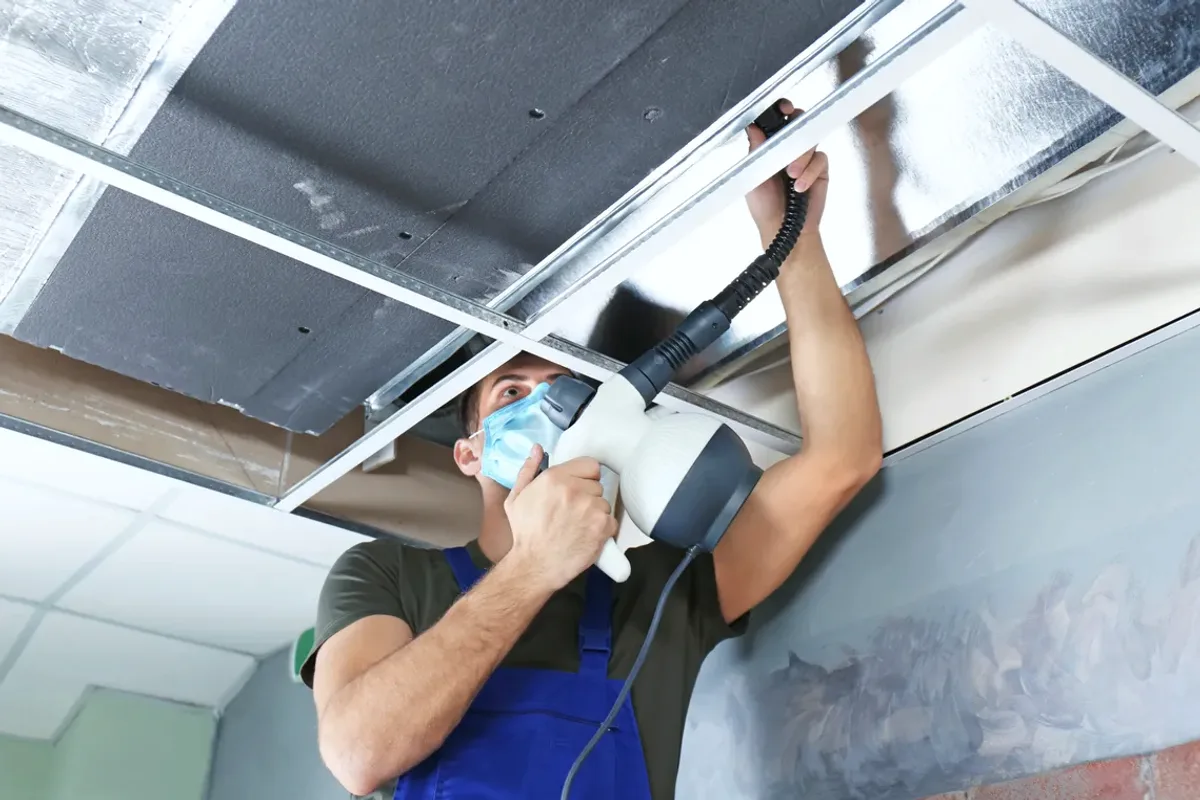
What inspection findings would show that duct cleaning is useful for this property's forced-air system?
Duct cleaning should be based on the condition of the ductwork rather than a fixed calendar interval. Visible debris, construction residue, or a specific airflow concern may justify closer inspection, while dust on a register alone does not establish that the full system needs cleaning. The duct layout, access points, return paths, and the condition of connected heating or cooling equipment affect the work plan. Inspection findings help determine whether cleaning is appropriate and how to protect the system during the process.
Assessment reviews visible debris, accessible duct sections, return paths, access limitations, and any reported airflow concern. It also considers whether dust is confined to a register or is present within the ductwork. Findings determine whether cleaning is warranted, which areas can be reached, and what precautions are needed around connected equipment. Manufacturer instructions and inspection results guide maintenance; a recurring schedule is not assumed.
Inspection of debris and construction residue in ductwork
Supply runs, return paths, access, and equipment protection
Evidence-based cleaning decisions and separate follow-up concerns
Assessment and Scope
Questions for the Proposed Work
01
Inspect before deciding to clean
The first step is to identify what is actually present in the ducts and whether the reported concern relates to the ductwork. Visible accumulation, construction debris, or material in an accessible return may support cleaning, while a dusty grille by itself may have another explanation. The layout and access points affect what can be inspected. These observations keep the scope tied to evidence instead of an automatic interval or an unverified whole-system claim.
02
Plan access and protect connected equipment
Duct configuration, return placement, and access openings determine which runs can be reached and how cleaning can be contained. The work plan should account for connected furnace or air-conditioning equipment and use methods appropriate to the duct materials and system. If a section is damaged or inaccessible, that affects the scope and should be identified rather than overlooked. Occupants should not open equipment or alter internal electrical or safety components.
03
Use findings to decide whether follow-up is needed
After cleaning, observations about remaining debris, duct condition, and airflow can help distinguish completed work from a separate repair or balancing concern. Cleaning does not correct a damaged duct, a mechanical equipment fault, or a control problem. Where a musty odour or weak airflow prompted the request, report whether it persists so the cause can be assessed separately. Further cleaning should follow inspection findings and applicable manufacturer guidance, not a routine timetable.
Compare the next step
Separate stale-room odour from evidence of contamination inside the air system. Ask for an inspection of any documented pest or water-entry concern and an explanation of the source. A cleaning scope should identify affected materials and components, with moisture correction or material replacement addressed when needed.
Routine cleaning is not automatically necessary and does not guarantee health or energy benefits. Resolve moisture sources and assess damaged materials rather than treating cleaning as the only remedy.